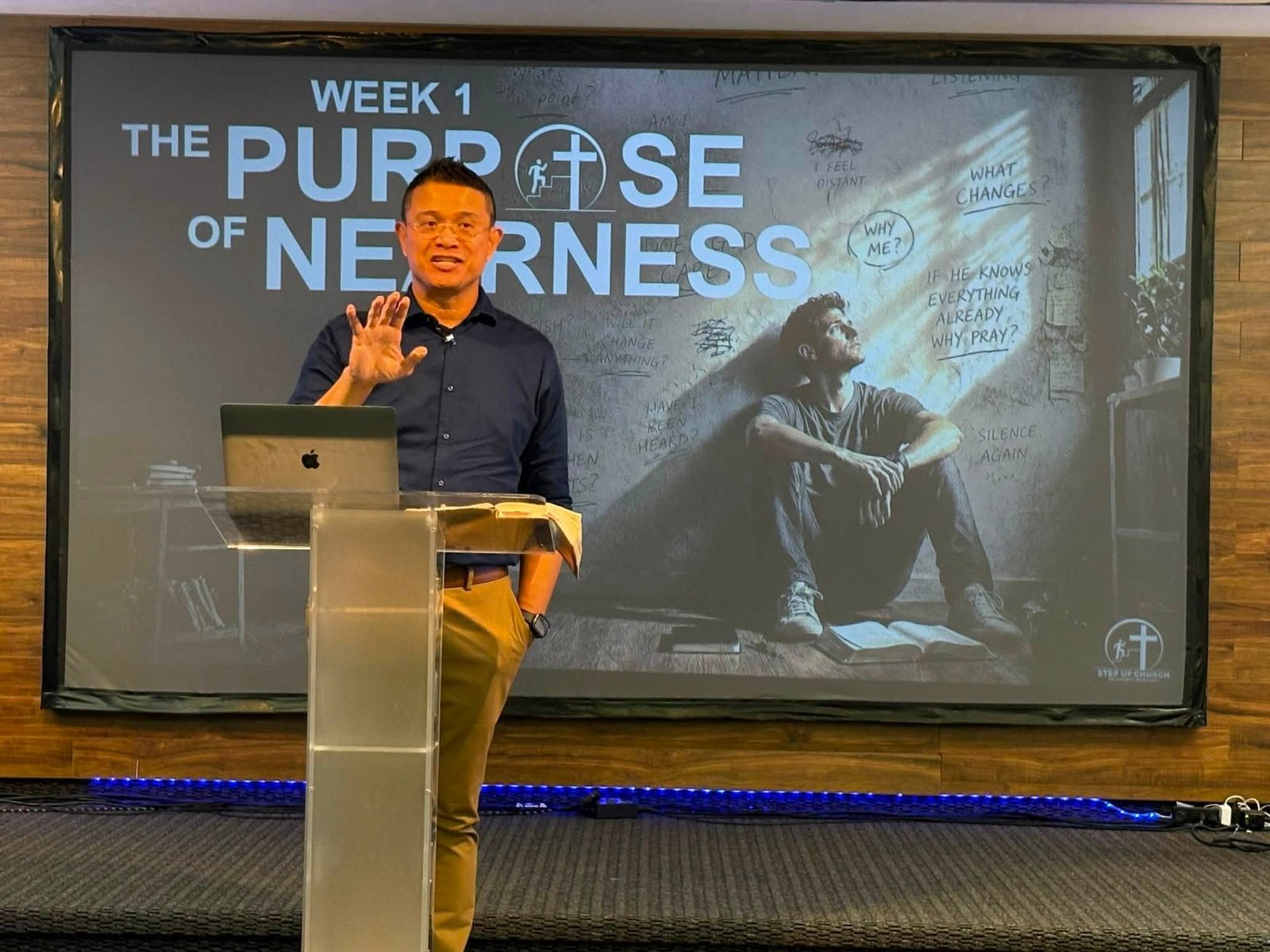
Week 2: The Mystery of Partnership
Ezekiel 22:23–31; James 4:1–3
Scripture presents a God whose rule over the world is complete, wise, and unthreatened, and yet this same God chooses to accomplish many of his purposes through the prayers of his people. Intercession is the holy mystery in which human beings step into their God-given role as co-laborers, and our petitions become instruments through which the kingdom of God presses into the circumstances of earth.
We move into a second question, and for many people this one may feel even more difficult.
If God is sovereign, if his will stands forever, if he truly reigns over history and does whatever pleases him in heaven and on earth, then why should intercession matter? Why pray for healing, for justice, for revival, for a wandering child, for a broken marriage, for a nation, for a church, for peace in a place of conflict, if God already knows, already sees, and already rules?
All these questions bring tension.
Because on one side of the tension, Scripture speaks with breathtaking confidence about the sovereignty of God. He declares the end from the beginning. He works all things according to the counsel of his will. His kingdom rules over all. The earth is the Lord’s and everything in it.
Yet on the other side of the tension, Scripture speaks just as plainly about the significance of prayer. Jesus teaches us to ask, seek, and knock. James says, “You do not have, because you do not ask.” Paul urges that prayers, petitions, and intercessions be made for all people. Ezekiel gives us a picture of God searching for someone who will “stand in the gap” on behalf of the land.
God is fully in charge, and our prayers genuinely matter. God’s will is supreme, and he has invited his people into meaningful participation. He does not need us in the way a limited being needs assistance, yet he has dignified us by involving us in the outworking of his purposes.
That is the mystery of partnership.
Ezekiel 22:30
The “breach” or “gap” is the broken place in a city wall, the opening through which danger pours. To stand in the gap is to take up a position of costly responsibility, to place yourself in the exposed place, to represent the people before God and, in a sense, to hold the line until mercy has its work.
James 4:2
In the Greek New Testament, the verb is the ordinary word for asking, requesting, appealing to one who is able to give. James does not treat asking as decorative. He treats it as consequential.
How can both of those things be true at the same time? How can God be absolutely sovereign, and how can our asking make a real difference?
Ezekiel 22
To hear Ezekiel 22 rightly, we need to feel the crisis of the chapter…Jerusalem is unraveling. The leaders are corrupt. The prophets are careless with truth. The priests have profaned what is holy. The princes devour the people for gain. Violence fills the land. Justice has eroded. The weak are exploited. The city still has religious language, but the moral and spiritual structure has been compromised almost everywhere you look.
And in that setting, God says something astonishing: “I sought for a man among them who should build up the wall and stand in the breach before me for the land.”
In ancient cities, the wall was the line of protection. If the wall was intact, there was some measure of safety. If the wall was broken, the entire city was vulnerable. So the image is both military and spiritual. A breach in the wall means there is a point of entry for destruction. Someone must take responsibility for the broken place.
That is what intercession is like.
Intercession is not a casual religious habit. It is standing before God on behalf of others. It is refusing to shrug at the broken places. It is seeing judgment, ruin, confusion, and moral collapse, and still stepping forward to plead for mercy, healing, and restoration. It is the work of those who love enough to stand in the exposed place.
And the tragedy of Ezekiel 22 is carried in the last phrase: “I found none.”
The sovereign God, who could accomplish all his will without strain or delay, describes himself as searching for an intercessor. He is revealing something to us about the way he has chosen to govern the world. He has made room for human response. He has appointed a role for prayer. He has given to his people the holy responsibility of standing in the gap.
Which means prayerlessness is not a minor oversight. Sometimes it leaves a place vacant that was meant to be occupied by love.
James 4:1–3 (James’ analysis/diagnosis)
James approaches the same mystery from a different angle.
His letter is painfully practical. He writes to believers dealing with conflict, envy, disordered desire, and spiritual instability. “What causes quarrels and what causes fights among you?” he asks. His answer goes to the roots: the passions at war within them. They crave, they grasp, they compete, they burn with discontent. Then he says, “You do not have, because you do not ask. You ask and do
Keep listening